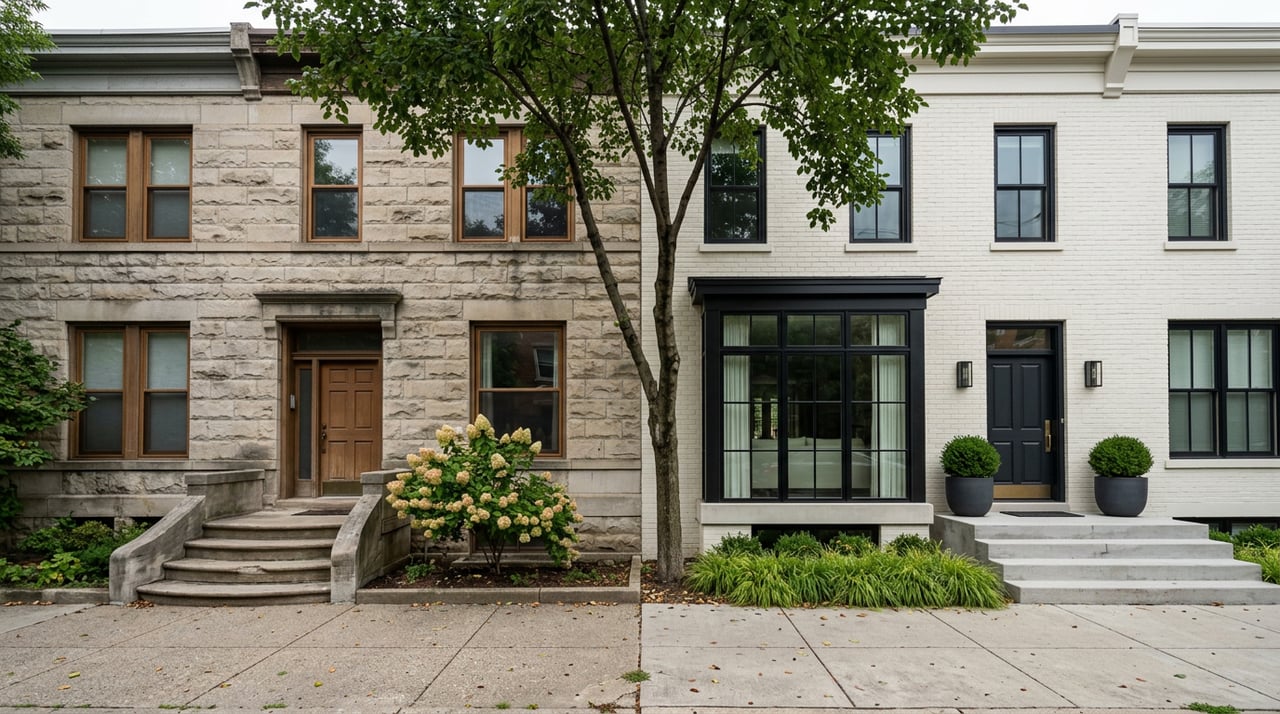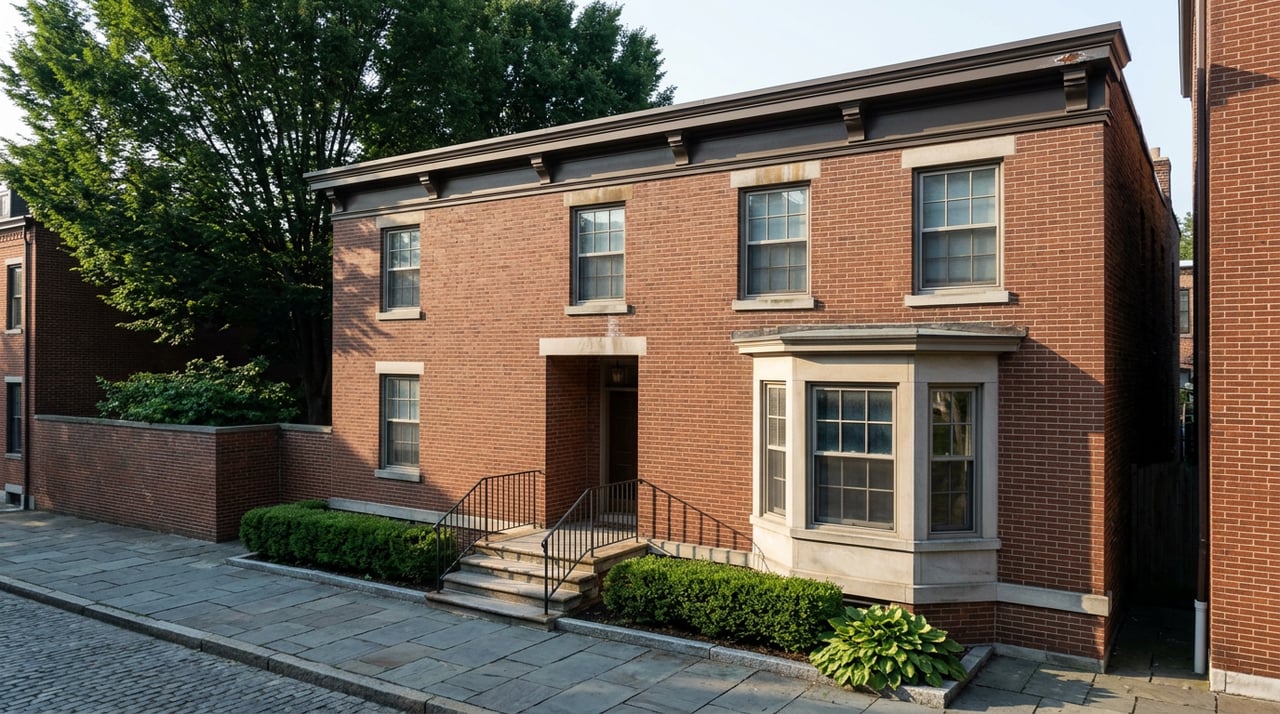
Forty-nine years ago today, on August 31, 1977, the Chicago City Council designated the Mid-North District a Chicago Landmark. That single vote is why a homeowner on Fremont Street or Cleveland Avenue who wants to swap out windows before listing this fall can't just call a contractor and schedule the work. The renovation has to clear a review process, and most of what trips people up isn't the review itself. It's the calendar.
Here is the part that catches sellers off guard: the Commission on Chicago Landmarks, the body that has to sign off on exterior changes in districts like Mid-North, Arlington-Deming, Sheffield, and Old Town Triangle, holds its regular meetings once a month, generally the first Thursday. Most permit applications never need that meeting. The city's own landmarks FAQ notes that the Commission reviews roughly 2,000 permits a year for landmarked properties, and most are approved in a single day at the staff level. But a project that needs a full Commission hearing, a significant façade change, an addition, a demolition, doesn't get to skip the queue. If the paperwork lands a week after that month's hearing, the next chance is thirty days out. That's not a construction delay. It's a scheduling accident, and it's the single most avoidable mistake I see homeowners make when they're timing a listing around exterior work.
The Districts Aren't Interchangeable, and Neither Is the Timeline
Lincoln Park contains several distinct landmark districts, each designated separately and each with its own boundary. Mid-North runs roughly from Fullerton south to Armitage, between Lincoln Avenue and Clark Street. Arlington-Deming sits nearby, notable because its buildings went up just after the Great Chicago Fire, when the area was still part of Lake View Township and exempt from the city's new post-fire building codes. Sheffield and Old Town Triangle cover their own footprints further south and west. If you're comparing two houses and one happens to sit two blocks outside any of these boundaries, you are comparing two entirely different renovation timelines, not two versions of the same one.
Inside a district, the ordinance protects what's visible from the public way: street-facing elevations, rooflines as seen from the sidewalk, the things a passerby actually sees. As the preservation advocacy group Landmark Lincoln Park puts it, landmark status protects the look, feel and spirit of a district as it appears from the public right of way, meaning it protects only what you see from the sidewalk or street. That's a meaningfully narrower scope than a lot of sellers assume. A gut renovation of a kitchen that doesn't touch the front façade or a visible roofline often moves through the standard building permit process without landmarks review at all. It's the front door, the windows facing the street, and any addition or new construction that pulls in the Commission.
Two Tracks, Two Very Different Clocks
The Landmarks Ordinance itself spells out the mechanics, and the timeline splits into two tracks depending on what you're proposing.
| Staff-Level Review | Full Commission Hearing | |
|---|---|---|
| Typical trigger | Routine repairs, in-kind replacements, minor visible changes | New construction, additions, demolition, major façade alteration |
| Who decides | Historic Preservation Division staff | Nine-member Commission, at a public meeting |
| Ordinance deadline | 15 days for a preliminary written decision | Same 15-day preliminary step, then added to the hearing calendar |
| Meeting cadence | Rolling, no meeting required | Generally first Thursday of the month |
| Practical effect on timing | Usually resolved in a few weeks | Can add a full month or more just waiting for the next hearing date |
The Landmarks Ordinance is specific about that first step. Under section 2-120-760, once the Commission receives a permit application, it has fifteen days to issue a written preliminary decision approving or disapproving it. That part is fast by design. What isn't fast is what happens next if your project needs more than a staff sign-off. A public hearing only happens when the Commission convenes, and the Commission convenes on its own schedule, not the seller's.
There's an even sharper version of this for anyone considering major demolition. Under the ordinance, if a permit application proposes demolishing 40 percent or more of a landmarked building or a building in a landmark district, the Commission's approval isn't final on its own. It goes to the City Council for additional review, and the ordinance gives that process up to 75 days to run. That's not a hypothetical for Lincoln Park. Mid-North's housing stock was built between 1865 and 1900, and any significant structural work on a contributing building from that era needs to be scoped against that 75-day clock before anyone starts pricing out a spring closing.
The System Is Active Right Now, Not Archival
It's worth knowing that landmark designation in Lincoln Park isn't a settled, decades-old list. It's moving this year. Three Lincoln Park buildings, the Roger Brown Home and Studio at 1926 N. Halsted (an 1888 building), and two DePaul University buildings, Byrne Hall and Cortelyou Commons, advanced through landmark designation together in 2026, with the City Council's zoning committee signing off on the group in May. If you're evaluating a property near any of these, it's worth checking its current designation status directly rather than relying on what a listing sheet or an old neighborhood map says, because the list changes.
The Mid-North Association also stays active in this process in a way that matters practically. Its Planning and Zoning Committee reviews proposed building projects for compatibility with the district's landmark guidelines, and the group regularly works directly with the 43rd Ward alderman's office on zoning matters. In practice, that means a renovation proposal in Mid-North can draw attention from both the city's Historic Preservation Division and an engaged, organized neighborhood association before it ever reaches a Commission vote. That's not a reason to avoid the district. It's a reason to loop in a professional who has done this before rather than finding out about the association's process mid-project.
What This Means If You're Listing or Making an Offer
If you're a seller planning exterior work before you list, the practical move is to find out early which track your project falls into. A window swap that matches the original profile and doesn't touch a street-facing element may clear staff review in a matter of weeks. An addition, a new garage, or any change to a front-facing element needs to go on the Commission's monthly calendar, and that calendar doesn't bend for a listing date.
If you're buying in one of these districts, ask for the property's permit history and any past approvals for exterior work before you waive a contingency. Open or unpermitted work doesn't disappear when a house changes hands. It follows the property, and Illinois law requires sellers to disclose known unpermitted work to buyers. For anything built before 1978, that disclosure obligation sits alongside separate federal requirements around lead-based paint, which is a real consideration in a neighborhood where a meaningful share of the housing stock predates 1940.
None of this is a reason to steer away from a landmarked block in Lincoln Park. The districts exist because the streetscape they protect is a large part of what makes the neighborhood worth buying into in the first place. It's a reason to build your timeline around the actual mechanism, not the assumption that a permit is a permit everywhere in the city.
A Few Direct Questions
Does every renovation inside a landmark district need Commission approval? No. Interior work and changes that aren't visible from the street typically move through the standard building permit process. It's exterior elements facing the public way, additions, new construction, and demolition that pull in landmarks review.
What happens if I buy a house where a previous owner did unapproved exterior work? The obligation follows the property. The city can require corrections regardless of who did the original work, which is why pulling the permit history before closing matters as much as the inspection itself.
How much extra time should I budget if my project needs a full Commission hearing? Plan around the monthly meeting cadence first, then the project scope. Missing a hearing date by even a few days can cost a full month before your project is heard at all.
If you're weighing a purchase or a listing inside one of Lincoln Park's landmark districts and want a clear-eyed read on the timeline before you commit to a renovation plan, The Yeager Team has walked this process with buyers and sellers across Mid-North, Old Town Triangle, and the neighborhood's other historic blocks. Reach out and we'll help you build a schedule that actually holds.