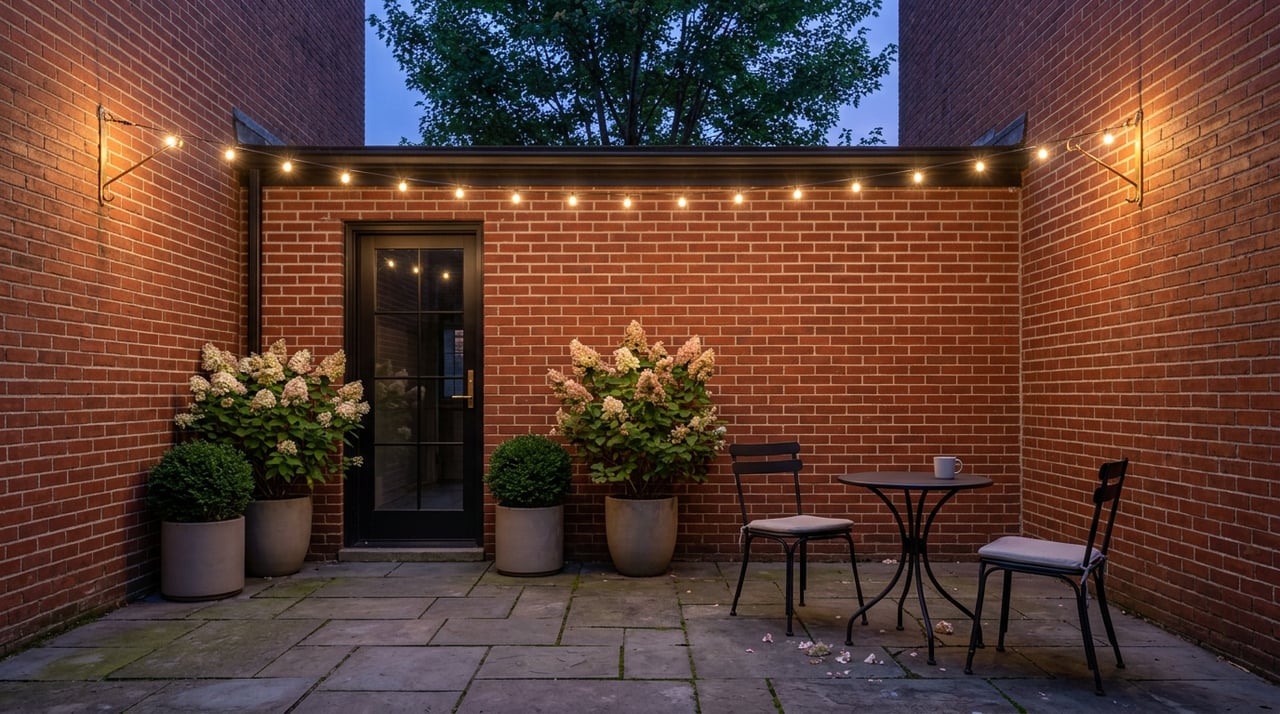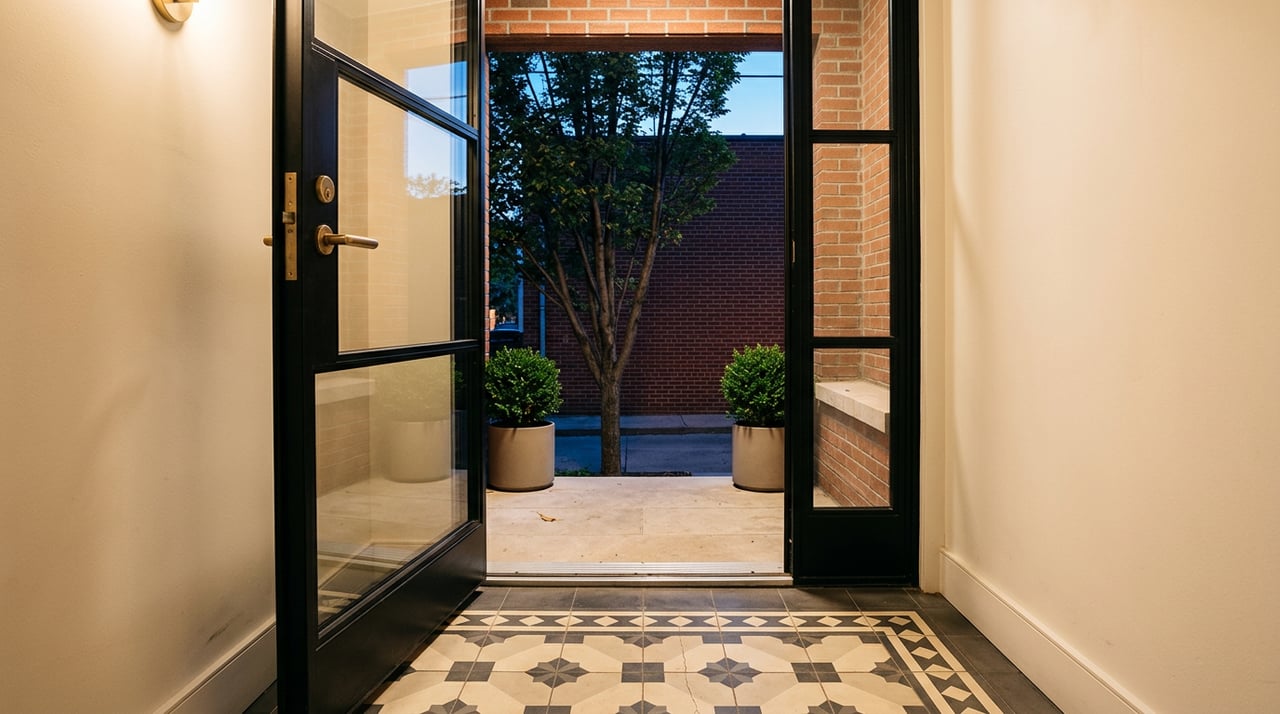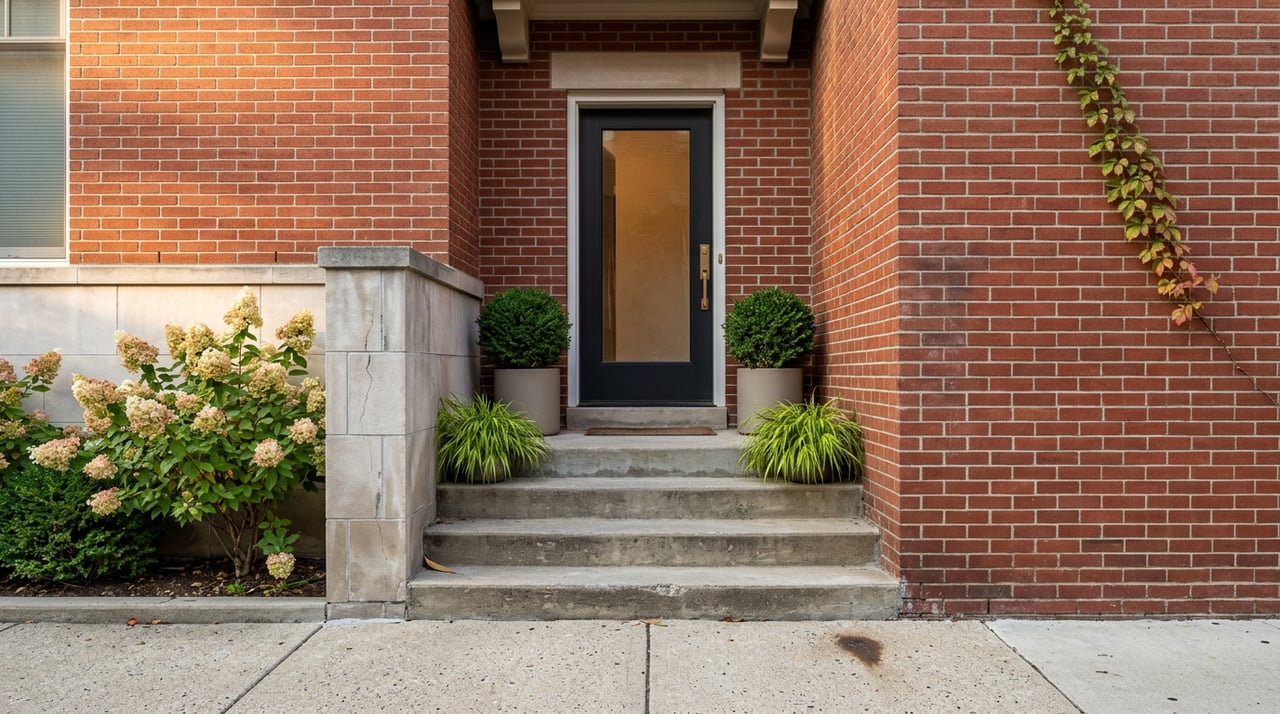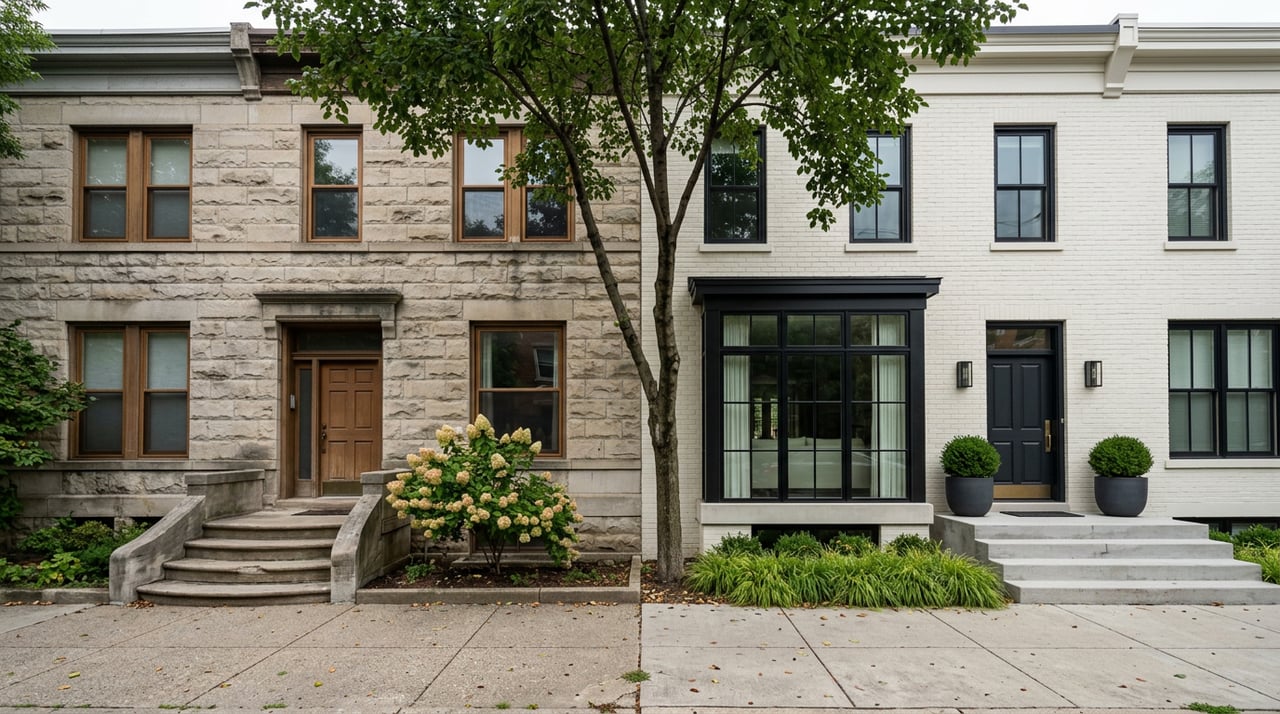
Stand at the corner of Lincoln and Waveland and you're looking at the contradiction up close. A one-story commercial building there is cleared for demolition to make way for a five-story, 16-unit apartment building with ground-floor retail, a project Centrum Realty & Development has spent the past year moving through zoning approval and City Council sign-off. A few blocks north and west, along the river near Oakdale, construction crews are completing the last of 35 townhomes at RiverWard, a $33 million first phase that developer ZSD Corp is already expanding by another 14 units. Meanwhile, on a quiet residential block nearby, a century-old two-flat sits with a for-sale sign, its price quietly negotiated downward from where it started.
Ask most people what's happening to North Center home values and you'll get a single answer: prices are up, it's competitive, good luck finding anything. That answer is true for about half the neighborhood and wrong for the other half, and the gap between those two halves is the story worth understanding before you write an offer or set a list price here.
The Number That Doesn't Match Itself
A second-quarter 2026 market analysis covering North Side sales from April through June found that the median price across nine neighborhoods, including North Center, Lake View, Lincoln Park and Lincoln Square, hit $500,000, the highest quarterly figure ever recorded for that segment. Inventory across the same nine neighborhoods fell 22.8 percent year over year, and the average listing that sold went under contract in 38 days, down from 50 days a year earlier. By every headline measure, this reads like a market accelerating uniformly upward.
North Center didn't move uniformly. In that same quarter, the median sale price for single-family homes in North Center fell 2.7 percent, the only decline among the nine North Side neighborhoods tracked, where the other eight all posted gains. At the same time, North Center's condo and attached-home median rose 15.2 percent, the largest gain of any of the nine neighborhoods, ahead of Rogers Park's 13.2 percent and Lincoln Park's and Lincoln Square's matching 12 percent gains.
That's not noise. That's two different products being sold under one neighborhood name, and the second-quarter numbers are the first time the gap has been large enough to see clearly in the data.
Where the New Units Are Actually Going
The condo surge has an address, or rather several of them. Landrosh Development's approved plan for 4009 N. Oakley, on the site of the former Chicago Joe's restaurant, calls for a five-story building topping out at 60 feet with 38 residential units, a mix of studios, one-bedrooms and two-bedrooms, plus ground-floor retail facing Irving Park Road. Centrum Realty's project at 3664 N. Lincoln adds another 16 rental apartments with retail at the corner of Waveland. The Belfield building at 3924 N. Lincoln has already opened to residents, with commercial space at street level and a parking garage accessed from the alley off Damen.
Then there's RiverWard, the largest single project reshaping the neighborhood's western edge. ZSD Corp bought the 80,000-square-foot riverfront parcel near the Lathrop Homes for just under $6 million in August 2025 and has been building 35 townhomes around a private drive, with a riverwalk extension required under the city's waterway planned development rules. The Chicago Plan Commission approved a 14-unit expansion this month, pushing the project's total value to roughly $43 million once the new phase, which includes three affordable units, is complete.
Here's a rough sense of the scale involved:
| Project | Address | Units | Type |
|---|---|---|---|
| 4009 N. Oakley | Irving Park & Oakley | 38 | Mixed-use, retail |
| 3664 N. Lincoln | Lincoln & Waveland | 16 | Mixed-use rental, retail |
| RiverWard (phase 1 + expansion) | 2259 W. Oakdale | 49 | For-sale townhomes |
| Belfield | 3924 N. Lincoln | Open to residents | Mixed-use, retail |
None of these units show up in a single-family comp. All of them show up in the neighborhood's overall housing count, and several are for-sale product that will eventually anchor condo and townhome medians going forward. That's the supply side of the 15.2 percent condo jump: new, amenity-rich units entering the market at new-construction pricing, which pulls the average up even as the count of available vintage single-family homes shrinks.
The Zoning Math Behind an Old Two-Flat's Price Tag
The single-family softening has a quieter, more granular explanation, and it shows up lot by lot rather than in five-story permits. North Center's RT-3.5 zoning, common across much of the neighborhood's interior blocks, allows a standard 25 or 30-foot lot to be built up to a floor area far larger than most existing structures use. One recent listing for a 27-by-125-foot North Center lot noted the site could support up to 3,570 square feet of above-grade floor area, not counting the basement, on a parcel currently holding a much smaller existing building.
That kind of headroom changes how a dated two-flat gets priced. A buyer weighing an unrenovated structure against the cost of demolition and new construction isn't pricing the house you can see. They're pricing the envelope the zoning allows, minus the cost of clearing what's there now. Builders like Strand Partners, currently developing a four-unit masonry and limestone building marketed as the St. Ben's project on an oversized 30-foot lot, and Meath Custom Homes, which has new construction underway near Welles Park and Coonley Elementary, are the buyers acting on that math at a smaller scale than the five-story projects. Every time one of them closes on a lot, the seller of the existing structure gets paid roughly what the land and zoning capacity are worth, not what a move-in-ready renovated home nearby would fetch.
That's the mechanism behind the 2.7 percent single-family dip. It isn't that people want North Center less. It's that a meaningful share of the single-family sales counted in that median are teardown candidates trading at land value, dragging the average down even while renovated, move-in-ready homes on the same blocks are still fielding competitive offers.
What This Means If You're Comparing Neighborhoods
If you're cross-shopping North Center against Lincoln Square or Lake View using a single median number, you're comparing an average of two different products against a more uniform market elsewhere. A buyer looking at new construction or a recently converted condo in North Center is paying into a market that jumped 15.2 percent in a single quarter. A buyer looking at an original two-flat on the same block might find room to negotiate, but should also ask whether that price reflects the house or the lot underneath it, especially on a wider parcel near Lincoln, Damen, or the river where redevelopment activity is heaviest.
Sellers face the mirror image of that question. A dated single-family home near an active development corridor may be competing less against other listed homes and more against what a builder would pay for the dirt. Knowing which side of that line your property sits on, before you set a list price, changes the marketing conversation entirely: renovated and move-in ready homes should be positioned and priced against comparable finished product, not against land-value comps that happen to share a zip code.
A Few Direct Questions
Does new construction always sell for more per square foot than a renovated vintage home? Not automatically, but the current data shows condo and attached-home prices in North Center rising faster than single-family in the same period, so new product is currently commanding a real premium over older stock that hasn't been updated.
How can I tell if my block is likely to see more teardown activity? Lot width and zoning are the biggest indicators. Wider parcels on RT-3.5-zoned blocks, particularly near commercial corridors like Lincoln Avenue or Irving Park Road, are the ones builders are targeting. Chicago's permit and zoning filings, tracked publicly through the city's development news coverage, are worth checking for any pending applications near a specific address before you price a listing or make an offer.
Is the single-family price drop a sign the neighborhood is cooling off? The broader North Side market posted a record quarterly median and falling inventory over the same period, so the data doesn't support a cooling story. The single-family dip in North Center looks like a mix shift driven by teardown-priced sales, not weakening demand for the neighborhood itself.
If you're weighing a North Center listing, whether it's a two-flat worth more for its lot than its layout or a new-build condo carrying a construction-era price tag, the number on the listing sheet only tells part of the story. The Yeager Team has spent years reading these blocks lot by lot for families and sellers who need the full picture before they price, offer, or negotiate. Find My Home starts with a conversation about which market you're actually in.